Battery electrode materials
A conductive binder for water-based electrode processing.
CPPA Binder is developing a fluorine-free, water-processable polymer binder for lithium-ion electrodes. We are looking for cell developers and electrode teams interested in evaluating it in their own formulations.
Discuss an evaluationLaboratory-stage technology · Winnipeg, Canada
Designed for an aqueous process
The material combines conductive polypyrrole with a water-compatible adhesive polymer. It is being developed as a fluorine-free candidate for applications that currently use PVDF and NMP-based processing. Suitability depends on the electrode formulation and process.
LFP cathode work
Half cell cycling data at 0.5C through 100 cycles, compared with PVDF:C and CMC:C electrodes.
Material preparation
Bench scale preparation has been demonstrated.
Graphite anode work
Half cell cycling data at 0.1C through 1,000 cycles, compared with a PVDF:C electrode.
Laboratory electrode results
The figures compare electrodes made with a polypyrrole and CMC binder (PPy:CMC) against PVDF:C controls. The LFP chart also includes a CMC:C control. These tests show sustained cycling in the reported half cell conditions; they do not establish performance in a commercial cell.
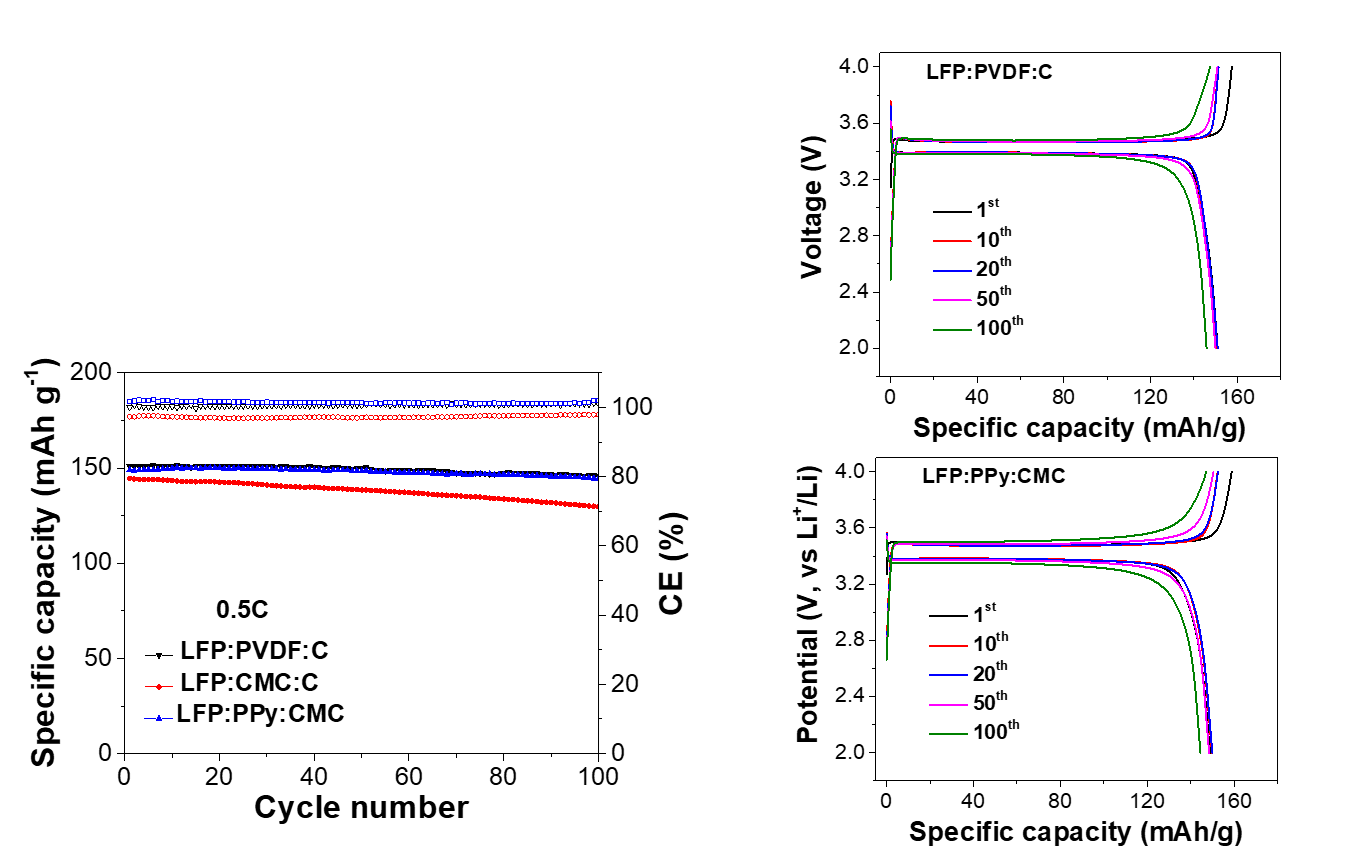
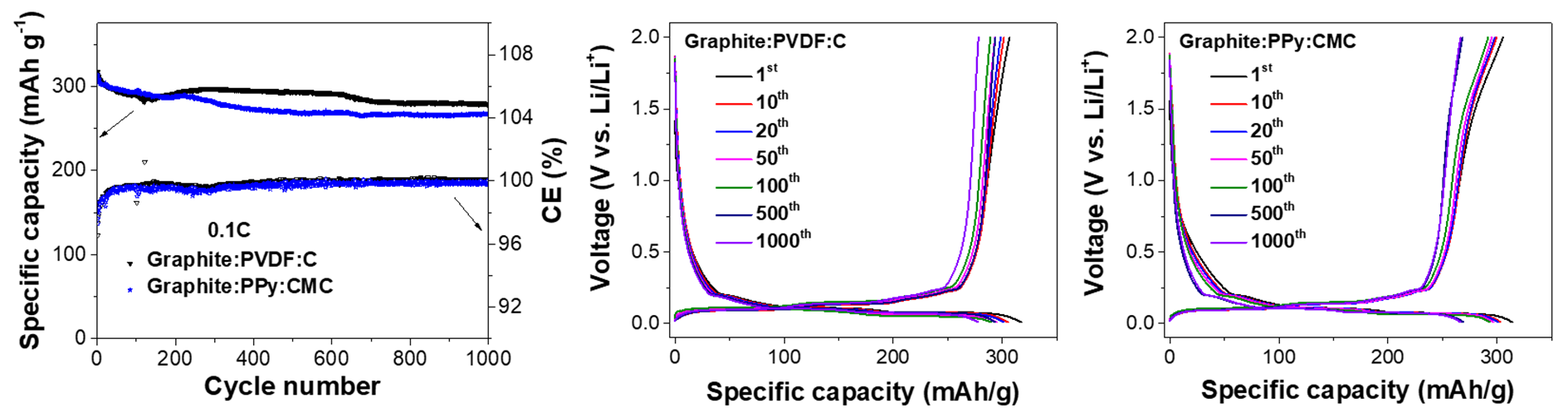
Source: CPPA Binder laboratory data supplied September 2026. Half cell results only. LFP/graphite full coin cell work is underway; silicon anode and pouch cell performance have not yet been established.
Evaluate it in your electrode system
A useful first discussion covers your electrode formulation, comparison binder, test protocol and success criteria. We can review available non-confidential results and discuss the scope, timing and cost of an evaluation sample after confirming fit.